


Pu-erh & Liubao Tea
Explore Yiwu raw and ripe Pu-erh alongside Guangxi Liubao, three post-fermented Chinese teas with distinct profiles ranging from evolving floral structure to smooth aged wood, honeyed depth and mellow richness.

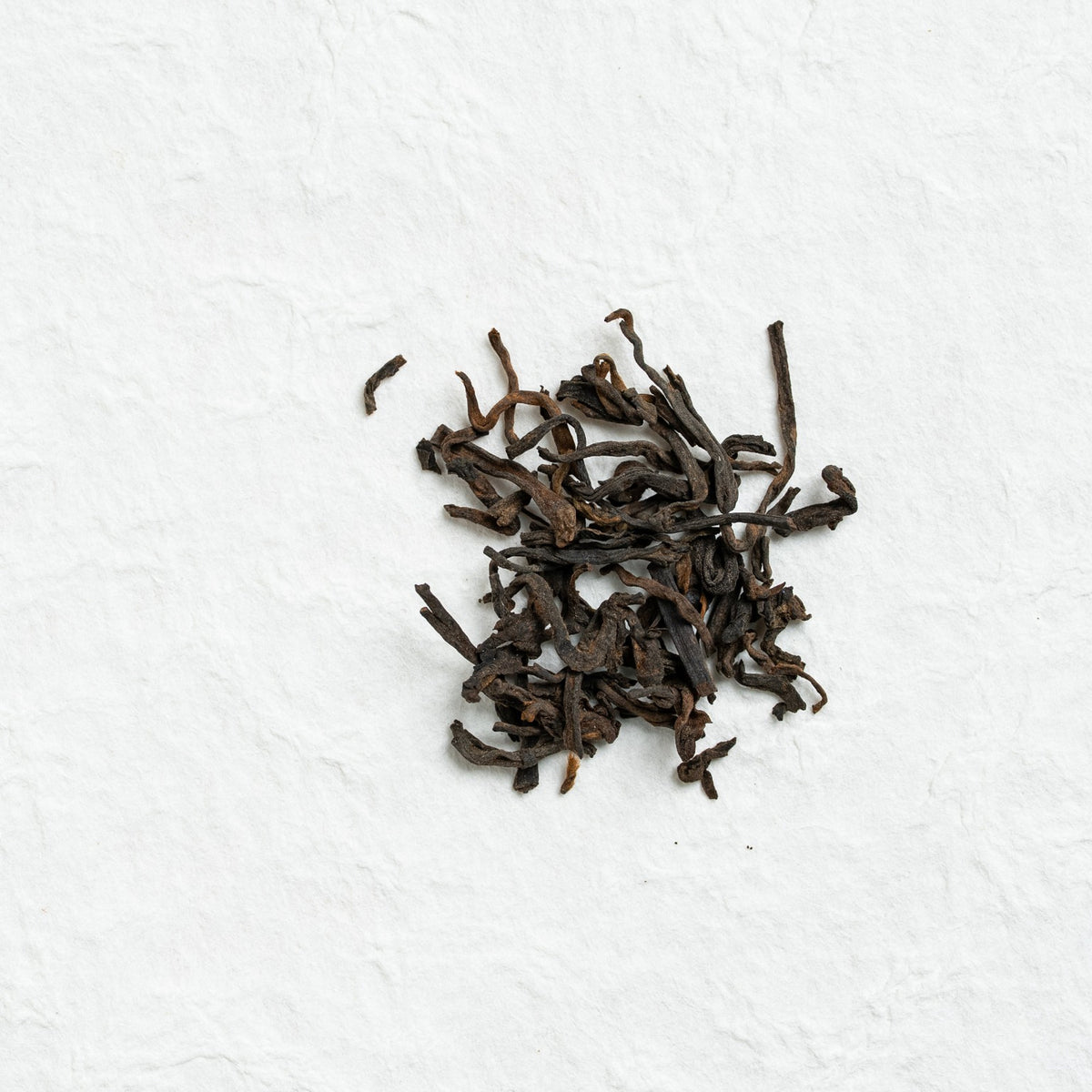


Craft
Pu-erh and Liubao develop through microbial activity and aging, but their processing differs by style.
Raw Pu-erh begins as sun-dried maocha and changes gradually over time, while ripe Pu-erh uses controlled pile fermentation to create a darker, mellower profile more quickly. Liubao also uses fermentation and aging techniques that build its characteristic earthy, woody, and softly sweet character.
Across these styles, storage and time play an important role in how aroma, color, and texture evolve.

Harvest
Pu-erh and Liubao are generally made from more mature leaf material than delicate spring green teas. Developed leaves can better withstand rolling, fermentation, compression, and long-term aging while retaining structure and body.
At Yunsho, our dark tea selection highlights two important origins: Yiwu, Yunnan, known for Pu-erh, and Wuzhou, Guangxi, the historic home of Liubao tea. These places offer distinct raw materials, processing traditions, and aging styles that shape the cup.
FAQs
What makes Pu-erh & Liubao tea distinctive?
Pu-erh and Liubao are valued for their deep, evolving character. Depending on style and age, they can show earthy, woody, date-like, nutty, mineral, or softly sweet notes, often with a smooth and rounded texture. Raw Pu-erh can be brighter and more layered, while ripe Pu-erh and Liubao are usually darker and mellower.
Can I add milk or other ingredients to Pu-erh & Liubao tea?
Yes. Ripe Pu-erh and Liubao have enough body to pair with milk if you enjoy a richer style, while many drinkers prefer them plain to follow how the aroma and texture change across infusions. We suggest tasting the tea on its own first, then experimenting with milk or other additions if desired.
What kind of teaware is best for brewing Pu-erh & Liubao tea?
For gongfu brewing, we recommend a Yixing clay teapot or a gaiwan. A clay pot can emphasize body and aged aroma, while a gaiwan makes it easy to follow changes from steep to steep. For compressed tea cakes, use a tea pick to loosen a portion gently while keeping the leaves as intact as possible.
What should I keep in mind when brewing and storing Pu-erh & Liubao tea?
Pu-erh and Liubao contain caffeine, and the amount varies by tea and brewing method. Near-boiling water is a good starting point for many dark teas, with steeping time adjusted to taste. A quick rinse is optional for compressed or aged tea. For storage, keep the tea in a clean, dry, odor-free environment away from excessive humidity, heat, and direct light. Proper storage can allow the aroma and texture to continue developing over time.


