


Chinese Oolong Tea
Explore Chinese oolong tea from Phoenix Dancong, Wuyi rock tea, Zhangping Shui Xian and Yongchun Buddha Hand, ranging from floral and fruity aromas to roasted, mineral depth across repeated gongfu infusions.

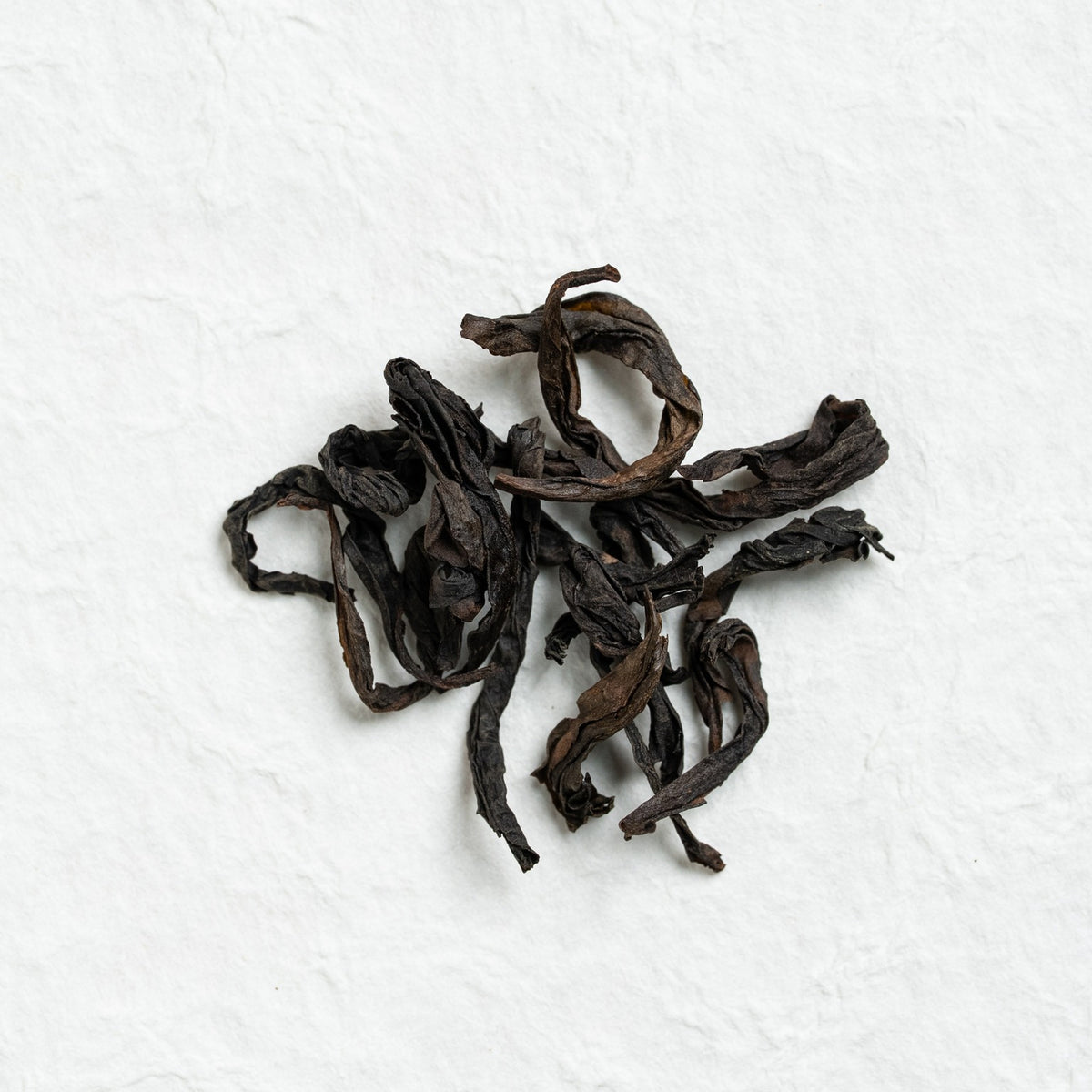


Craft
Oolong tea is partially oxidized, standing between green tea and black tea.
Its craftsmanship is among the most intricate of all tea types.
The heart of oolong making is zuo qing (bruising and oxidation) — the leaves are repeatedly shaken and rested. The bruised edges oxidize, helping create oolong's layered aroma and distinctive character. Oxidation levels vary widely, giving oolong an exceptionally broad flavor spectrum — from light and floral to deep and roasted.

Harvest
Unlike green tea, which often prizes very tender buds and leaves, oolong generally requires more mature leaf material. The standard pick is typically one bud and two to four leaves — developed enough to withstand repeated shaking, oxidation, and roasting.
Leaves harvested at this stage can carry layered aromas through infusion after infusion, from floral and fruity notes to mineral and roasted tones.
FAQs
What makes oolong tea distinctive?
Oolong tea is partially oxidized and known for its exceptionally wide flavor range. Depending on origin, oxidation, and roasting, it can be floral and creamy, fruity and honeyed, or deep and roasted. Whole-leaf oolong also unfolds over multiple infusions, making it especially well suited to gongfu brewing.
Can I add milk, sugar, or brew oolong iced?
Our whole-leaf oolong offers rich, layered flavors. We recommend drinking it pure to fully appreciate its floral, fruity, honeyed, or roasted notes. Lightly oxidized oolongs can also make excellent cold brew. Darker, more heavily roasted oolongs can pair well with milk if you prefer a richer style.
What kind of teaware is best for brewing oolong tea?
We recommend a gaiwan or a small Yixing clay teapot. A gaiwan is non-porous and makes it easy to follow each layer of aroma. A Yixing teapot, with its heat retention, can work especially well for roasted oolongs and Wuyi rock tea. Porcelain is also a reliable choice for everyday brewing.
What should I keep in mind when brewing and storing oolong tea?
Oolong tea contains caffeine, so if you are caffeine-sensitive, consider a smaller serving or an earlier drinking time. Brewing temperature depends on style: many traditional roasted oolongs perform well with near-boiling water, while lighter styles can be brewed a little cooler. Store the leaves in an airtight container away from heat, moisture, light, and strong odors.


