



Tea knowledge 白茶
Chinese White Tea
White tea offers more than a single pale, delicate cup. Its buds, leaves, origins, and making traditions give you several ways to explore it.
In this guide
What Is White Tea?
White tea is made from Camellia sinensis, the tea plant. Its defining processing stages are withering and drying. During withering, freshly picked material loses moisture and changes before the final drying stage.
Green tea typically receives an early heat treatment to limit the enzymes involved in oxidation. White tea follows a different approach: withering plays a central role in developing the finished tea. A short list of processing stages still leaves many choices for the maker.
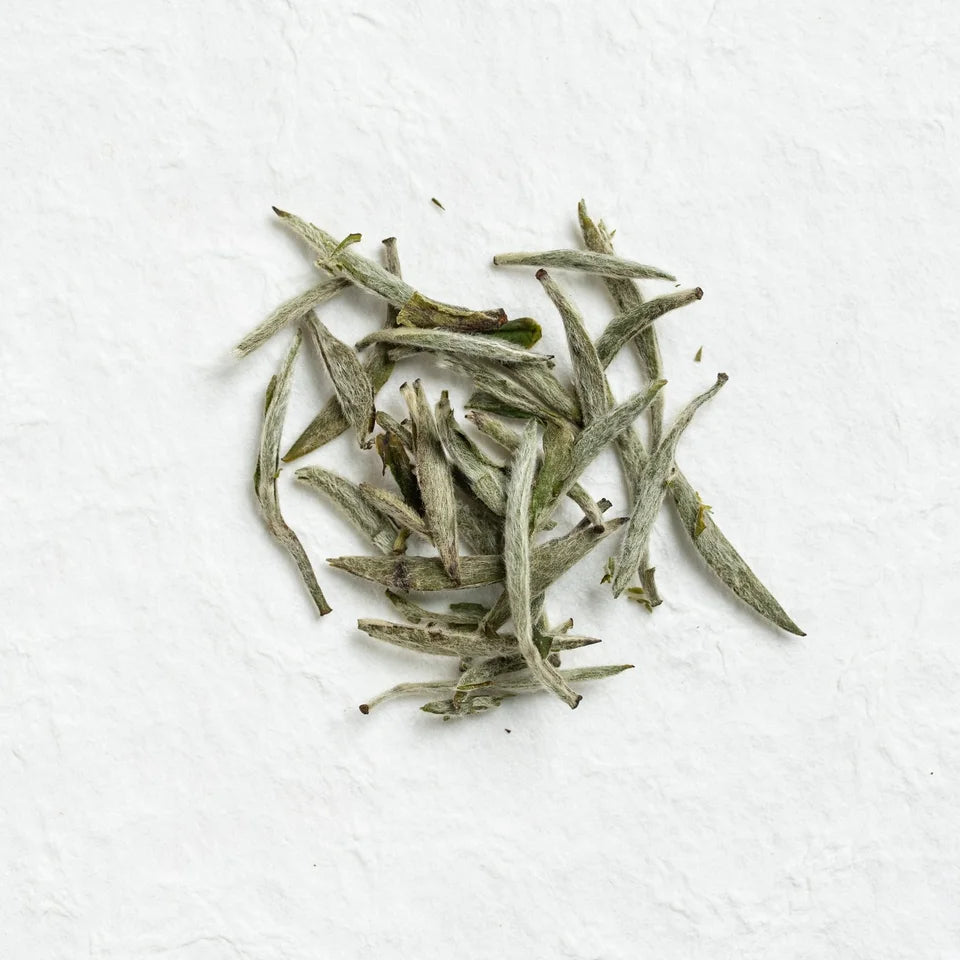
The category is not defined by a white leaf or a colorless infusion. Buds may carry fine pale hairs, while the brewed tea can show different shades and depths of color.
Silver Needle, White Peony, Gongmei, and Shoumei
These are four common names in Chinese white tea. Start by looking at the material in front of you.
| Name | What to notice |
|---|---|
| Baihao Yinzhen, or Silver Needle | A style centered on buds, often covered with fine pale hairs. Compare the dry buds with their appearance after brewing. |
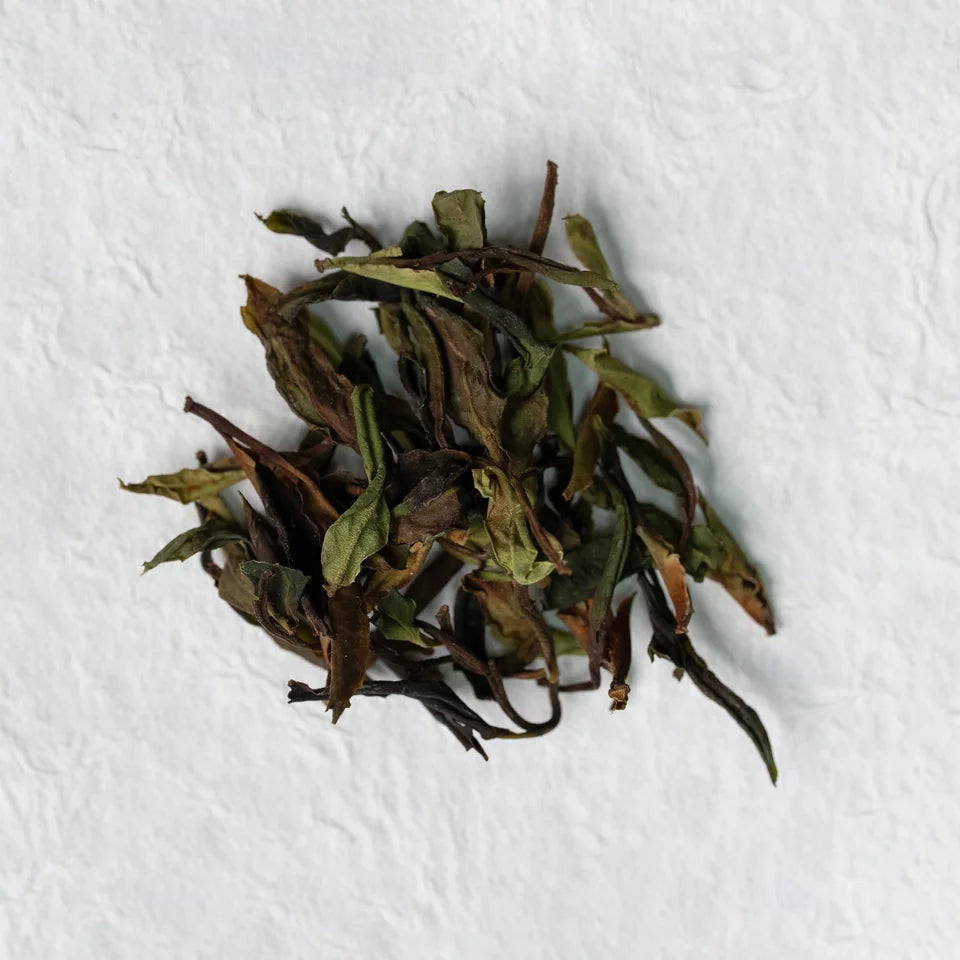
| Bai Mudan, or White Peony | Buds and leaves together, with a more open, natural leaf shape. Look at the relationship between the bud and surrounding leaves. |
| Gongmei | A bud-and-leaf white tea, often described as slimmer in appearance than White Peony. Its raw-material specification also matters; Gongmei and Shoumei should not simply be treated as interchangeable names. |
| Shoumei | A leafier white-tea style. Its larger leaves offer another way to explore white tea beyond a bud-focused cup. |
These names describe different kinds of tea, rather than four steps on a universal quality ladder. More buds do not automatically mean a tea will suit you better. Leafier material deserves to be understood on its own terms.
Grades within a type also have their own requirements. Compare a tea's stated type, origin, material, and condition before assuming that similar-looking names mean equivalent products.
Where White Tea Comes From
Fujian is an important place to begin. Fuding in northeastern Fujian and Zhenghe in northern Fujian are two established white-tea origins.
An origin name and a tea-tree cultivar tell you different things. The first points to a place; a cultivar is a cultivated variety of the tea plant. Neither replaces the explanation of how the material was processed.
White tea is also produced outside Fujian. Yunnan examples include tea sold as Yue Guang Bai, often translated as Moonlight White. Look for the particular tea’s material and making description rather than assuming every tea with the same market name is identical.
White-tea processing has also been used with cultivars grown in Zhejiang. The cultivar and the way its leaves are made are separate parts of a tea’s identity.
When comparing origins, look for a clear account of the material and making. A regional name is useful context, but it cannot tell you everything about an individual cup.
Withering, Drying, and the Maker's Choices
Withering involves more than letting the leaves sit. Air conditions, the material itself, and the way it is handled can influence the result. Sunlight, indoor conditions, and combined approaches may be used in different making traditions.
Drying brings the tea to its finished dry state. “Sun-dried” describes a method used in making; it does not by itself establish that every stage was done by hand or that the tea must taste better.
Many traditional descriptions emphasize withering without the rolling associated with other tea categories. There are also new-process white teas that include light rolling. Compressing finished white tea into a cake is a separate operation. These differences are a reason to read the individual tea's description carefully.
What to Notice in the Cup
Smell the brewed tea, then taste it as it cools enough to drink comfortably. You might notice floral, fresh, gently sweet, or woody impressions, depending on the tea and its condition.
Pay attention to texture as well as aroma. Does the tea feel light, rounded, smooth, or drying? Sweetness is a taste; a sweet-smelling aroma is another part of the experience. A pale-looking infusion can still have a noticeable texture.
After swallowing, notice what remains. Compare the first sip with a later one and, if you brew again, compare the next infusion. You do not need to identify a particular flower or fruit to describe what you enjoy.
Loose Tea, Cakes, and Stored White Tea
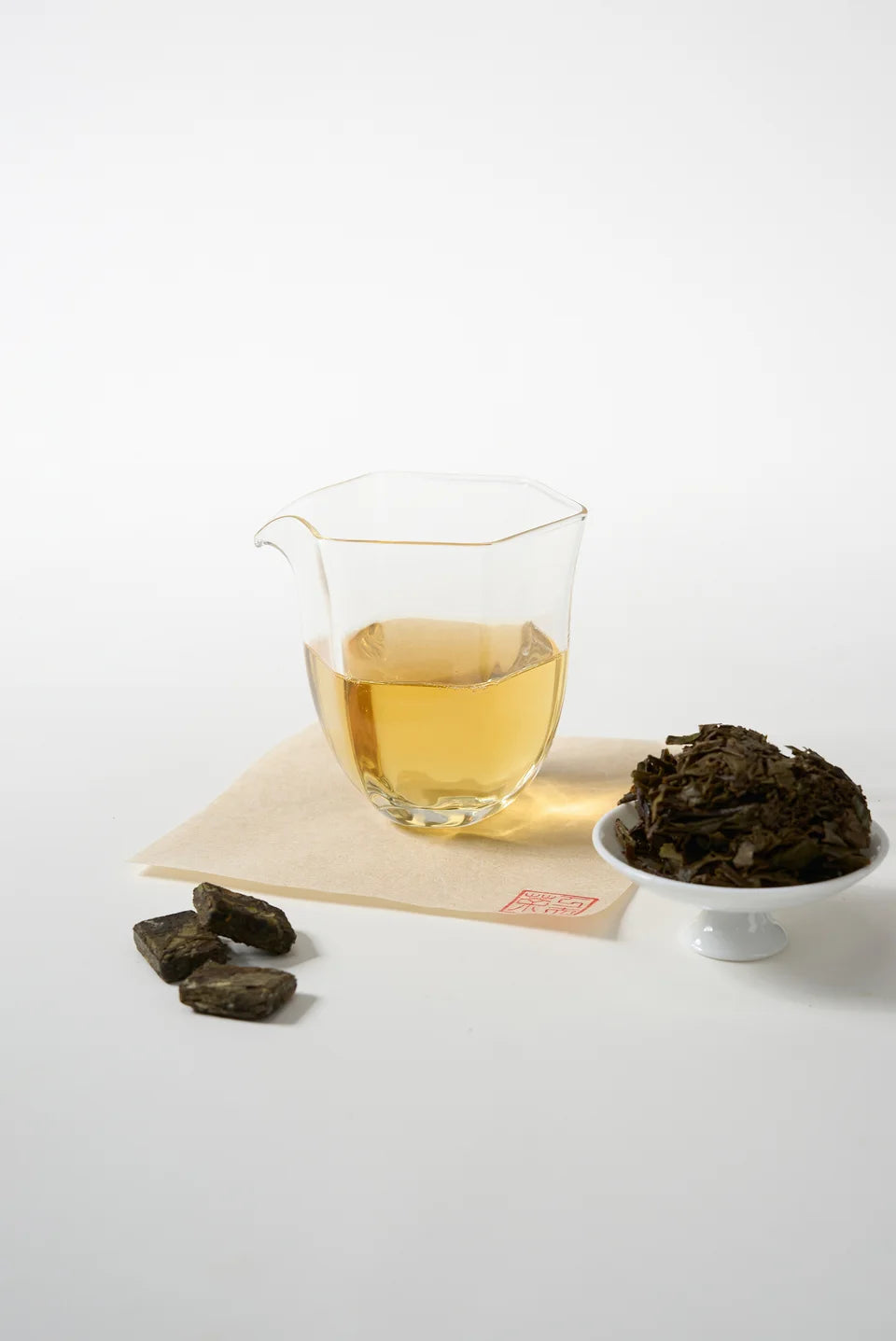
Loose tea and compressed tea describe form. Harvest year describes when the material was picked; a pressing date describes another event. A cake's appearance alone does not establish its age.
For a cake, separate a manageable piece and consider how tightly it is compressed. Watch how it opens during brewing instead of assuming it will behave exactly like loose leaves.
Storage can change white tea, but change does not guarantee improvement. The starting material, packaging, and storage conditions matter alongside time. An older year on a label is not a substitute for a clear history or a cup you enjoy.
If you want to explore stored white tea, ask about harvest and storage records, then compare its aroma, texture, and finish with a fresher tea. Treat the comparison as an exploration rather than a rule that older must be better.
Choosing Your First White Tea
For a visible comparison, begin with Silver Needle beside White Peony: buds on their own and buds with leaves. To explore a leafier direction, look for clearly described Gongmei or Shoumei. Read the material and processing information alongside the type name.
If your main interest is storage, choose a tea with a clear harvest and storage history. Comparing a fresh tea with an older one can be interesting, but differences in material or making may also affect the cup. Decide whether you want to learn about leaf type, origin, or storage first; one clear question makes the choice easier.
Brewing White Tea
A mug with a removable infuser, a teapot, or a gaiwan can all give you a way to explore white tea. A gaiwan is a Chinese lidded bowl used for brewing and pouring tea.
For loose White Peony, one possible cup-brewing starting point is:
| Leaf | Water | Temperature | First steep |
|---|---|---|---|
| 5 g | 355 ml, about 12 US fl oz | About 190°F / 88°C | 4 minutes, then strain |
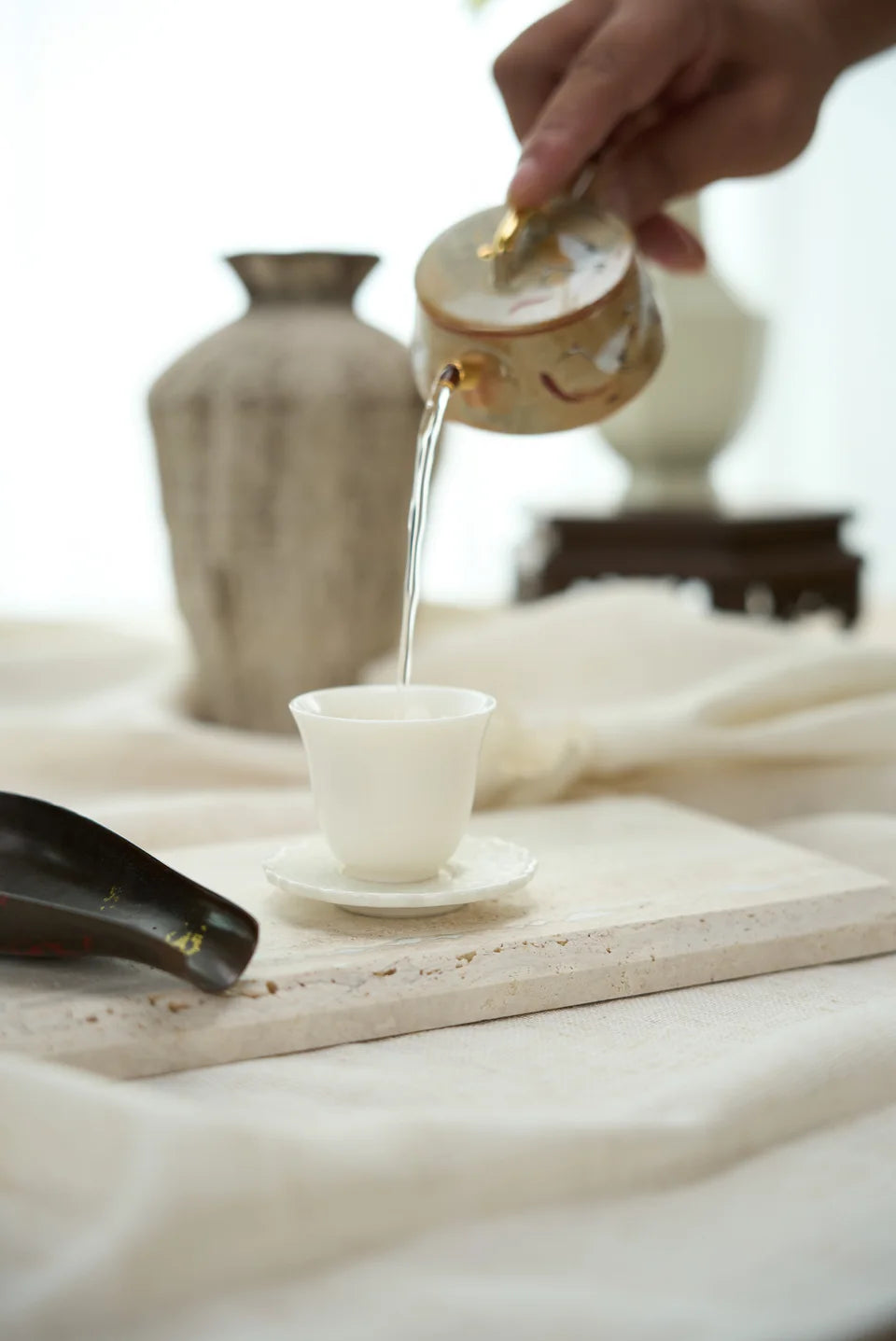
Measure the water you actually add, time the steep, and taste after it cools comfortably. This is a starting example for a particular loose White Peony, not a temperature ceiling or a recipe for every white tea. Bud-focused tea, leafier styles, and tightly compressed pieces may need different handling. Follow the instructions supplied with your tea when they differ.
Short, concentrated gaiwan brewing needs its own ratio and timing. Do not move a long mug steep into a small vessel filled with much more leaf.
For a mug or teapot, give the leaves room to open. Use the tea's brewing guidance as your first reference, note the amount of leaf and water, and separate the infusion from the leaves when it reaches a strength you enjoy.
For small repeated infusions, use a consistent leaf amount and pour the tea out fully between steeps. Notice how the leaves open and how the next cup changes. A tightly compressed piece may open differently from loose buds or leaves.
There is no single temperature or steeping time that gives every white tea its best result. Higher temperature and a longer steep can change the balance of extracted compounds and the sensory result. Judge the cup rather than assuming the gentlest-looking tea always needs the coolest water.
| What you notice | What to try next |
|---|---|
| The cup is stronger or more drying than you enjoy | Shorten the steep while keeping the other variables consistent. |
| The cup is too light | Allow more time; for compressed tea, also watch whether the piece has opened. |
| Two cups are difficult to compare | Use the same water, vessel, leaf-to-water ratio, and steeping time. |
| A later infusion tastes different | Notice the change in aroma, texture, and finish before deciding how to adjust. |
Change one variable at a time. For a useful comparison, write down the tea, leaf amount, water amount, temperature, and time. The point is to find an approach you can repeat and enjoy.
Storing Dry White Tea
Protect dry tea from moisture and strong odors, and avoid unnecessary exposure to heat and light. Keep the packaging well closed and follow the instructions supplied for the particular tea.
Everyday storage and deliberately managing a tea for years are different tasks. Leaving a package exposed to room air is not a reliable way to make it age well. You do not need to create a humid storage environment to begin enjoying white tea.
If you keep tea over time, retain the harvest and purchase information and a record of how it has been stored. Those details are more useful than guessing an age from leaf color.
A Way to Explore White Tea
Start with a difference you can see: buds beside buds and leaves, loose tea beside a cake, or two clearly identified origins. Then connect that difference to what you notice in the cup.
Tasting with another person adds another perspective. Compare descriptions without needing to agree on every note. The names and making traditions become easier to remember when they connect to an experience.
Common Questions
Is Anji Bai Cha a white tea?
Anji Bai Cha is classified as green tea. Its name refers to its pale spring growth, while the processing places the finished tea in the green-tea category.
Are the fine pale hairs on Silver Needle normal?
Fine hairs on the buds are a characteristic feature of Silver Needle. They are part of the tea material, rather than an ingredient added to the tea.
Does white tea contain caffeine?
Yes. White tea contains caffeine. The type name alone does not establish the amount in your cup, and “white tea” should not be read as “caffeine-free.”
Can the color of the infusion tell me how good the tea is?
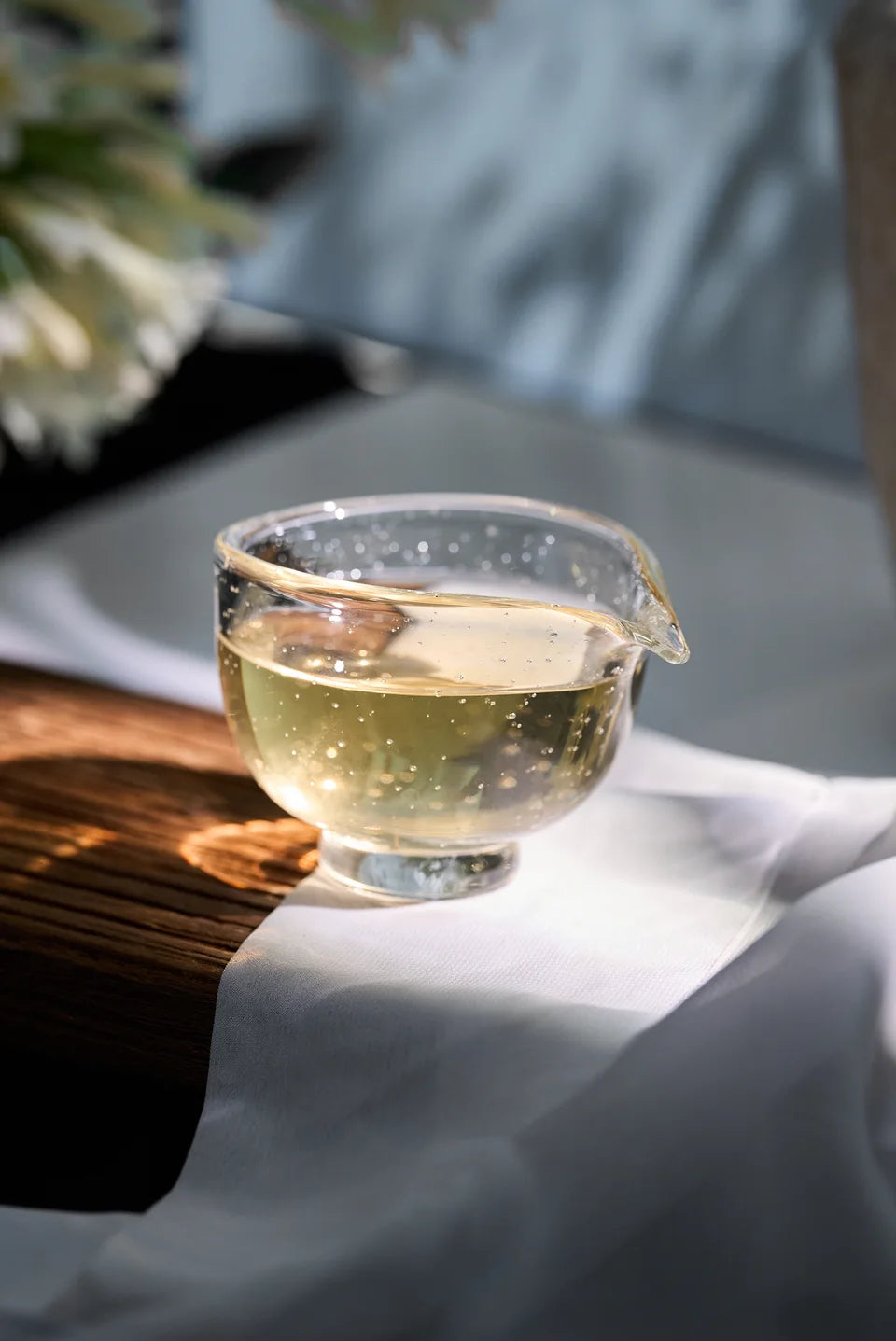
Color is one observation. Consider aroma, taste, texture, and finish alongside it. A deeper-colored cup is not automatically stronger in every sensory dimension or better in quality.
Continue Exploring
Choose one comparison for your next cup: Silver Needle and White Peony, two different origins, or loose and compressed white tea. Keep your brewing consistent and notice what changes.
For a closer look, read the Silver Needle guide, White Peony guide, or Sun-Dried White Tea guide.
If you have a style in mind, browse Yunsho’s current white-tea selection.