


Tea guides / oolong tea

Zhangping Shui Xian

The Story Behind the Little Square Oolong

Unwrap the story of Fujian’s little square oolong, from its hills and paper-wrapped craft to a gently floral, rounded cup.

What is Zhangping Shui Xian?

Zhangping Shui Xian is a Fujian oolong known for small, paper-wrapped squares of pressed leaves. Oolong processing develops its character before molding and baking give it a distinctive form; the leaves loosen and expand when brewed.

Explore Yunsho’s Zhangping Shui Xian
A pressed square of Zhangping Shui Xian dry tea on a light surface
Yunsho’s Zhangping Shui Xian dry tea

Meet the Little Square Oolong

Zhangping Shui Xian is a Fujian oolong known for a compact square of pressed leaves wrapped in paper. It is also called Shui Xian tea cake, paper-wrapped tea or square tea.

Its appearance is a useful introduction: individual rolled leaves remain visible within the compact shape. The Chinese name combines a place with the Shui Xian tea name. In the cup, gentle florals and a rounded texture give you another way to get to know it.

Compression alone does not turn a tea into Pu-erh. The making and leaf transformation determine the category; this little square belongs to the oolong family.

Explore the six Chinese tea categories
A square of pressed tea in a white bowl with individual leaves visible
Leaves within a square tea cake (illustrative scene)
A compact square of pressed tea on a pale surface
A small square of pressed tea (illustrative scene)

The Hills Around Zhangping

Zhangping lies in southwestern Fujian, within Longyan. Nanyang and Shuangyang are important names in the tea’s regional story: Nanyang is a principal production area, while Shuangyang is closely connected to its early development.

The area has wooded hills, rainfall and a mild subtropical climate. Local makers work with the leaves and the weather they receive, building experience through the seasons. Geography gives context to the tea, alongside the choices made during processing.

A clearly stated origin is more useful than a broad quality label. When comparing teas, consider the place, the making and the cup together.

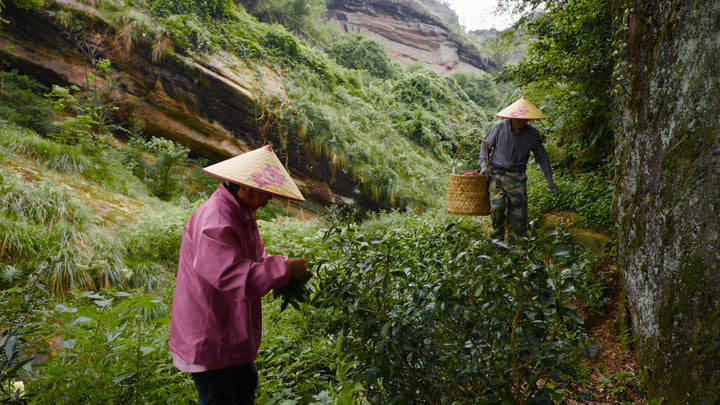
Tea garden rows with people among misty wooded hills
A misty tea-growing landscape (illustrative scene)

How the Local Story Began

In the early twentieth century, Liu Yongfa brought Shui Xian tea plants from northern Fujian to his home in Dahui, in what is now Zhangping’s Shuangyang area. Local growers and makers gradually adapted their experience to the leaves and conditions around them.

The tea’s story also includes trade. Deng Guanjin learned from Liu and founded Deng Jin Ji in 1934. Tea traveled from the mountain villages to customers in southern Fujian and Guangdong, and through overseas Chinese communities.

These accounts describe a regional tradition that developed through growing, making and selling tea. The small square you unwrap today is a memorable way to encounter that history.

Why Is It Square?

The shape began as a practical solution. In one early tea-trade account, loose rolled leaves were gathered into small portions and held in paper before drying. Hand-shaped portions varied in size, so a wooden mold offered a more consistent form.

The square made the tea easier to pack and transport. Mold and paper then became recognizable parts of its presentation. A square cake still holds visible leaves rather than turning them into a solid block.

Look at the cake before brewing, then watch it loosen in water. That change from a compact portion to expanded leaves is part of the pleasure of this style.

Hands placing tea leaves into a wooden mold
Filling a wooden mold (illustrative scene)
Hands lifting a wooden mold from a square of tea on paper
Releasing the shaped leaves (illustrative scene)

How Oolong Character Develops

The traditional route includes picking, sun withering, cooling, leaf-turning and resting, heat fixation, rolling, shaping and baking. The early handling develops the leaves before they take their square form.

During leaf-turning and resting, movement and pauses work together as oxidation develops. Heat fixation then limits enzymatic activity, and rolling prepares the leaves for shaping. The maker adjusts the handling to the leaf condition and the weather.

Greenish leaf centers with reddish margins are a familiar oolong appearance. They offer something to observe, rather than a fixed oxidation percentage to measure from a photograph.

Green leaves gathered in a woven basket
Leaf material in a basket (illustrative scene)
A green tea leaf with reddish edges held above a basket
Leaf centers and edges (illustrative scene)

Paper Wrapping and the Final Finish

After rolling, the leaves are shaped in a square mold and wrapped in paper before baking. These finishing steps give the tea its distinctive presentation while completing the drying.

The maker needs to manage the flavor and the moisture within the compressed portion. The wrapper holds the shape; it is removed before brewing. For the drinker, the finished square is convenient to handle and interesting to watch as it opens.

Between sessions, keep the tea closed, dry and away from heat, humidity and strong odors. A wrapper is part of the presentation, so follow the storage guidance supplied with the tea as well.

Hands folding white paper around a square of tea
Paper wrapping after shaping (illustrative scene)

What to Notice as the Cake Opens

Start with the aroma, then the texture and the finish. Yunsho describes its Zhangping Shui Xian with gentle natural florals, a creamy smooth taste, a refined rounded texture and returning sweetness after the sip.

As the pressed leaves loosen, compare the early infusion with the next. Notice how the aroma carries through the cup, whether the texture becomes fuller, and what remains after swallowing. Those changes matter more than reaching a promised number of infusions.

Look at the expanded leaves after brewing. Their centers and margins add another detail to the experience, while the flavor you enjoy remains the best guide to how you brew the next cup.

Brewed tea liquor of Zhangping Shui Xian Oolong Tea
Yunsho’s Zhangping Shui Xian tea liquor
Two opened tea leaves with reddish margins on a white dish
Expanded leaves and their margins (illustrative scene)

Give the Leaves Room to Open

Remove the paper wrapper first. A gaiwan or small teapot lets you explore separate infusions; a roomy infuser can suit a mug. Leave enough space for the square to loosen and the leaves to expand.

Warm the vessel, add the tea and water, and follow the guidance supplied for the tea you are drinking as a starting point. Pour the infusion completely away from the leaves when it reaches the strength you enjoy.

Adjust one thing at a time. If the cup feels too strong, shorten the next infusion; if it is too light, allow a little more time. The compact beginning and the opened leaves later in the session may need different timing. In a mug, remove the infuser once the tea tastes right to you.

Get to know the gaiwan Getting started with gongfu brewing
Water being poured over a pressed tea square in a white bowl
A pressed tea square beginning to loosen (illustrative scene)

Common Questions

Is Zhangping Shui Xian the same as Wuyi Shui Xian?

They are both oolong styles, but the place names distinguish them. Zhangping is known for its compact, paper-wrapped squares, while Wuyi Shui Xian belongs to the rock-tea tradition of northern Fujian. The shared Shui Xian name does not make their processing and cups identical.

Should I leave the paper on when brewing?

No. Remove the wrapper before adding the tea to your vessel. Choose a gaiwan, teapot or roomy infuser with enough space for the pressed leaves to loosen and expand.

Does the square mean it is a Pu-erh tea?

No. Compression is a shape, not a tea category. Zhangping Shui Xian is an oolong: its leaf-turning, controlled oxidation, heat fixation, rolling and finishing give it that identity.

Explore this tea

Zhangping Shui Xian

View Zhangping Shui Xian Browse Chinese Oolong Tea