Tea guides / oolong tea

Oriental Beauty

Taiwan’s Honey-Scented Oolong

Explore its honeyed fragrance, white-tipped leaves and naming stories, then follow the meeting of leafhoppers, leaf material and careful tea making.

What is Oriental Beauty?

Oriental Beauty, also called Bai Hao Oolong, is a Taiwanese oolong known for honeyed fragrance and ripe-fruit notes. Leafhopper-fed shoots and substantial withering and oxidation are distinctive parts of its tea-making tradition.

Oriental Beauty Oolong Tea loose leaves on a light textured surface
Yunsho’s Oriental Beauty dry tea

Meet Bai Hao Oolong

Oriental Beauty is a Taiwanese oolong also known as Bai Hao Oolong or White-Tip Oolong. Bai hao refers to the fine pale hairs on its tender buds.

Its making allows substantial oxidation, giving it a warmer aromatic direction than many fresh, lightly oxidized oolongs. Honeyed fragrance and ripe-fruit impressions provide a useful introduction.

If you already enjoy black tea, its warm color and fruit-led aroma may feel familiar. Follow the leaf, the making and the cup as you explore what places it in the oolong family.

Explore the six Chinese tea categories Browse Oolong Tea
Curled dark tea leaves and pale buds on a light surface
Curled leaves and pale buds (illustrative scene)
Curled dark tea leaves on a wooden dish in warm light
Dry leaves in warm light (illustrative scene)

A Royal Legend and a Local Nickname

A popular naming legend tells of a British merchant presenting this Taiwanese tea to a British queen. In the story, she admires its fragrance and the leaves opening in water, and calls it “Oriental Beauty.” Cultural accounts give different versions, so the story belongs to the tea’s lore rather than one established event.

Peng Feng Tea introduces another side of its personality. The local expression refers to bragging or telling a tall tale. One familiar story describes a farmer selling unusually fragrant tea for a surprisingly high price, then meeting disbelief when he returns home with the news.

These names bring elegance and village humor to the same cup. They add cultural context while leaving you free to discover the fragrance for yourself.

Taiwan’s Tea-Growing Communities

Oriental Beauty is closely associated with Beipu and Emei in Hsinchu and with Miaoli. Other Taiwanese tea regions, including Longtan and Shiding, also produce it.

Qing Xin Da Mao is a principal cultivar in the tradition. That regional background helps explain the tea’s identity; it does not identify the cultivar or county of every tea sold under the name.

The fresh shoots and the conditions in which they grow provide the maker’s starting point. The interaction with tea green leafhoppers is a distinctive part of that material.

Green tea shoots against a blue sky
Tea shoots in daylight (illustrative scene)

The Tiny Insect Behind the Honeyed Aroma

The aromatic story begins while the shoots are still growing. Tea green leafhoppers feed on tender growth using piercing mouthparts, prompting the plant’s defensive responses and changes in its aroma-related compounds.

During subsequent withering and oxidation, the leaf material develops further. The raw material and the making together help create the honeyed, floral and ripe-fruit fragrance associated with Oriental Beauty.

The feeding does not establish pesticide or organic certification. Those are separate questions about a particular tea and its documented growing conditions.

Withering, Turning and Moist Resting

Fresh shoots move through substantial withering and repeated turning with periods of rest. Moisture loss and oxidation change their condition and help develop the tea’s ripe-fruit character.

After heat fixation, moist resting is a distinctive part of the traditional route, allowing the leaves to regain pliability before rolling. Drying then finishes the tea.

Each stage has its own role, and the maker follows the condition of the material. Fresh shoots are the starting point for a sequence of changes through handling, heating and finishing.

A mound of fresh green tea leaves on a green surface
Fresh leaf material before making (illustrative scene)

Colors, Curls and White Tips

The classic appearance combines pale buds with shades of green, yellow, red and brown, which explains the nickname Five-Color Tea. Their proportions and visibility vary from tea to tea.

Look closely at the curls, the leaf edges and any pale bud hairs you can see. A mixed handful and a few individual leaves offer complementary views of the finished form.

Then notice what changes when the leaves open. Their dry shape gives you a starting point for observation, while the infusion adds fragrance, color and texture.

Curled brown leaves and pale buds in a white dish
Dry-leaf colors in a white dish (illustrative scene)
Individual dry leaves of Yunsho Oriental Beauty Oolong Tea
Yunsho’s Oriental Beauty dry-leaf detail

Honey, Ripe Fruit and Soft Florals

Honey-like fragrance, ripe fruit and gentle florals are characteristic references for Oriental Beauty. Its liquor is often amber to orange-red, and the cup is commonly described as mellow and rounded.

Yunsho’s current Oriental Beauty description emphasizes natural honey fragrance, ripe peach and soft florals. Use those notes as references while giving your own cup room to unfold.

Smell the warm lid, take a small sip and give the finish a moment. Taste a little tea again as it cools, then return to the empty cup to follow the remaining fragrance.

Opened brown tea leaves in a white bowl with amber tea behind
Leaves opening after infusion (illustrative scene)

Follow the Fragrance as the Cup Cools

A gaiwan or small teapot lets you enjoy separate infusions. Warm the vessel and begin with the brewing guidance supplied with your tea, then compare the aroma and strength of each cup.

Drain each infusion thoroughly. Shorten the next steep if it feels too strong; give it a little more time if it is too light. Keep other variables steady while you adjust.

For a mug, choose a spacious infuser and remove the leaves when the tea reaches the strength you enjoy. Try the first cup plain, smell the warm lid and taste again after the liquor cools a little.

Get to know the gaiwan Getting started with gongfu brewing
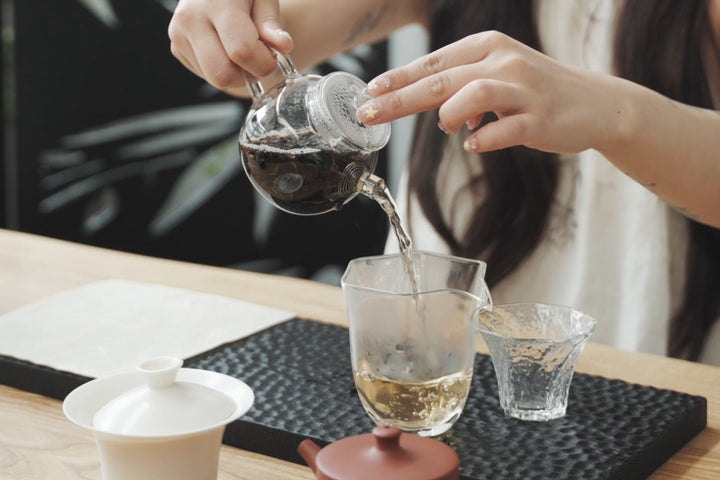
A hand pouring golden tea from a white gaiwan into a clear pitcher
Pouring from a gaiwan (illustrative scene)

Common Questions

Is Bai Hao Oolong a white tea?

Bai Hao refers to the pale hairs on tender buds. Oriental Beauty is an oolong, made through substantial withering, oxidation, heat fixation and further finishing. The word white in its other name describes its appearance rather than its tea category.

How are tea green leafhoppers connected with its aroma?

Feeding on the growing shoots triggers responses in the tea plant that contribute to its aromatic starting point. Later withering and oxidation develop that material into the honeyed, floral and ripe-fruit character associated with Oriental Beauty.

Did a British queen really name Oriental Beauty?

The queen-naming account is a popular tea legend, with different versions in cultural sources. It is best read as part of the tea’s naming tradition rather than a single established historical event.