Tea guides / oolong tea

Honey Orchid Dancong

A Fragrant Oolong from Phoenix Mountain

Follow honeyed florals from the leaf to the lid and cup, while exploring Phoenix Dancong’s tradition, making and small-cup brewing.

What is Honey Orchid Dancong?

Honey Orchid Dancong, also called Mi Lan Xiang, is an oolong associated with Guangdong’s Phoenix Mountain tradition. Its aroma name introduces honey-like and orchid-like impressions, while leaf material and making together shape the cup.

Explore Yunsho’s Honey Orchid Dancong
Dry loose leaves of Honey Orchid Dancong Oolong Tea
Yunsho’s Honey Orchid Dancong dry tea

What Honey Orchid Means

Honey Orchid Dancong, or Mi Lan Xiang, is an oolong associated with the Phoenix Mountain tea tradition of Guangdong. Its name gives you a useful introduction: mi means honey, lan means orchid and xiang means fragrance.

The words describe an aroma style. Follow the floral impression and the honey-like sweetness as you smell and taste, without feeling that every cup must match one exact list of notes.

Long twisted leaves are a familiar presentation, while the making and the cup help place the tea within the oolong family.

Explore the six Chinese tea categories
Long dark twisted tea leaves in a speckled bowl
Twisted dry-leaf strips (illustrative scene)

The Tradition Behind Dancong

Dancong is connected with a tradition of recognizing distinctive individual tea plants. Growers selected outstanding plants and kept their harvesting and making separate, giving each plant’s character room to stand out.

Over generations, selection and propagation helped build the variety of aroma names associated with the region. The historical single-plant practice explains the name without establishing the sourcing of every tea sold under it today.

For a particular tea, clearly stated sourcing matters. A name alone does not reveal a tree’s age, its exact site or whether one packet came from a single plant.

A person on a ladder reaching into tall tea plants
Working among tall tea plants (illustrative scene)

Phoenix Mountain and Chaozhou

Phoenix Dancong is associated with the Phoenix Mountain region around Chaozhou in Guangdong, southern China. Fenghuang is the Chinese name translated as Phoenix.

The mountain setting and the local communities provide context for a tradition centered on fragrance and careful making. Growing conditions, plants and processing work together in the finished cup.

Chaozhou gongfu tea offers another way to encounter the tea: small vessels and cups, separate infusions and time shared around a table. That setting gives you room to follow the fragrance and the finish.

Getting started with gongfu brewing
Wooded mountain slopes and distant tea terraces under clouds
Mountain slopes and tea terraces (illustrative scene)
People among tall tea bushes on a green hillside
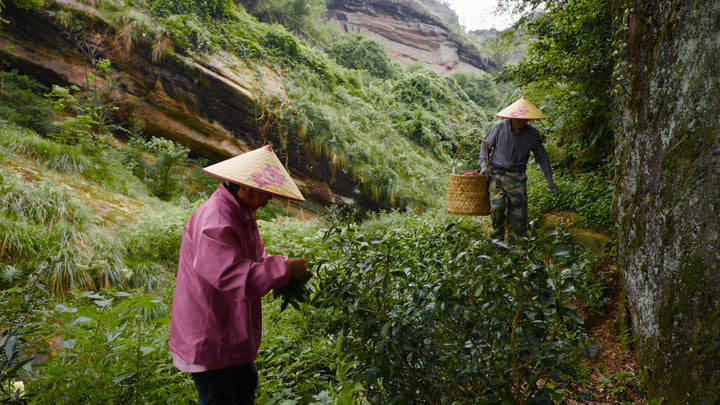
Picking among hillside tea plants (illustrative scene)

Fragrance Begins in the Leaf

The leaf material provides an aromatic starting point, and tea making develops it further. Research on Dancong compares varied floral and honeyed aroma profiles; the experience comes from a combination of aromas rather than one isolated note.

Withering and controlled oxidation are part of that transformation. Later drying and roasting also influence the balance, alongside the growing conditions and the plants.

In your cup, compare what appears in the warm lid with what carries into the liquor and remains in the empty cup. Those observations are more useful for everyday tasting than trying to identify individual aroma compounds.

A hand holding a green tea shoot
A fresh shoot before making (illustrative scene)

Withering, Movement and Rest

The broad making route begins with picking, withering and cooling. During leaf-turning, often called lang qing, the maker alternates movement with periods of rest as the leaves develop their aroma and oxidation.

The material and the weather guide the work. The maker watches, feels and smells the leaves to decide how the next stage should proceed.

Outdoor spreading and indoor resting make this early part of the craft easier to picture. Their purpose is different from the heat fixation and later finishing that follow.

Green leaves spread across outdoor woven trays
Leaves spread on outdoor trays (illustrative scene)
Green leaves on round woven trays arranged on indoor racks
Leaves resting on indoor trays (illustrative scene)

From Softened Leaves to Finished Strips

Heat fixation limits enzymatic oxidation after the earlier leaf-turning work. Rolling shapes the softened leaves into strips, and drying and roasting finish the tea.

Each stage has a different purpose. The maker’s choices help determine how floral fragrance, roasted warmth and body sit together in the cup; no single roast intensity describes every Dancong.

Keep the finished tea closed, dry and away from strong odors between sessions. Follow the storage guidance supplied with the tea, so you can enjoy its present fragrance.

Orchid, Honey and Ripe Fruit

Yunsho currently describes its Honey Orchid Dancong through persistent orchid fragrance, honeyed sweetness and ripe-peach fruitiness. Its texture is pronounced and crisp, with structure supporting a lingering orchid and ripe-fruit finish.

Smell first, then take a small sip. Notice how the aroma follows into the mouth, how the texture carries it, and what remains after swallowing. Give the finish a moment before taking the next sip.

Compare separate infusions and revisit a little tea as it cools. The empty cup and the opened leaves add further details to the experience without promising a fixed number of infusions.

Brewed tea liquor of Honey Orchid Dancong Oolong Tea
Yunsho’s Honey Orchid Dancong tea liquor
Opened brown-green tea leaves in a white bowl
Leaves after infusion (illustrative scene)

Follow It Through Small Cups

A gaiwan or small teapot lets you explore the tea through separate infusions. Warm the vessel, add the tea and water, and use the guidance supplied with the tea you are drinking as a starting point.

Pour the infusion completely away from the leaves once it reaches the strength you enjoy. If it feels too strong or drying, shorten the next infusion; if it feels too light, give it a little more time. Adjust one variable at a time.

For a mug, choose a roomy infuser and remove it when the cup tastes right. Smell the lid and the empty cup as they cool, then see how that fragrance follows into the next sip.

Get to know the gaiwan Getting started with gongfu brewing
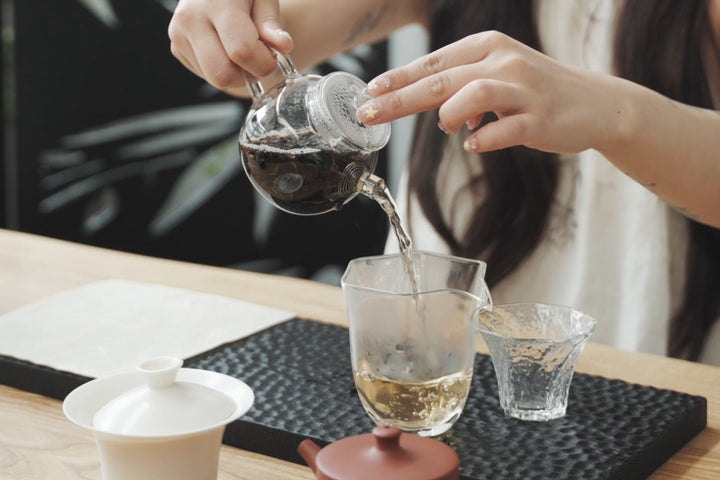
A hand pouring tea from a small clay pot into three cups
Serving small cups from a teapot (illustrative scene)
Three cups of amber tea on a pale plate
Three small cups of tea (illustrative scene)

Common Questions

What does Mi Lan Xiang mean?

Mi refers to honey, lan to orchid and xiang to fragrance. The name introduces an aroma style within Dancong, giving you references for the honeyed and floral impressions in the cup.

Does Dancong mean every packet comes from one tree?

The name is connected with a tradition of selecting distinctive plants and making their leaves separately. A tea sold as Dancong does not by its name alone establish that a particular packet comes from one individual tree. That requires specific sourcing information.

How can I soften a cup that feels too strong?

Shorten the next infusion and pour it completely away from the leaves when it tastes right. Keep the vessel and leaf amount consistent as you compare cups, then adjust one variable at a time.

Explore this tea

Honey Orchid Dancong

View Honey Orchid Dancong Browse Chinese Oolong Tea