Tea guides / dark tea

Farmhouse Liubao

A Guangxi Tea with a Story to Tell

Explore Guangxi’s farmhouse tea tradition, the river journeys behind its trade, and the leaf, storage and brewing choices that shape a mature cup.

What is Liubao?

Farmhouse Liubao refers to traditional-process Liubao associated with Guangxi’s local tea-making households and workshops. Its initial making and storage history differ from the later water-added pile fermentation commonly used in modern Liubao.

Explore Yunsho’s Liubao
Dry loose leaves of Liubao Tea
Yunsho’s Liubao dry tea

What Farmhouse Liubao Means

Liubao takes its name from Liubao Town in Cangwu County, Wuzhou, Guangxi. It belongs to the Chinese dark-tea tradition, known as hei cha.

Farmhouse tea, or nong jia cha, commonly refers to Liubao made through traditional methods associated with local households and workshops. Traditional-process and modern-process Liubao both remain part of the region’s tea culture.

The term introduces a making tradition. For an individual tea, the leaf material, the maker’s choices and its storage history give you more to understand than the label alone.

Explore the six Chinese tea categories
Dry leaves of Yunsho Liubao Tea on a pale surface
Yunsho’s Liubao dry leaves

A Tea from Guangxi’s Hills

Liubao Town and the surrounding Cangwu tea-growing communities provide the geographical starting point for this tradition. Wuzhou connects that inland landscape with a wider river network.

Growing material and local making practices work together in the finished cup. A shoot held in the hand offers a close view of the leaf before processing, while the garden scene shows another part of that journey.

For a particular tea, look for the origin and production information supplied with it. The regional name adds context without identifying one exact garden, cultivar or maker.

Young green tea shoots in an open palm
Fresh shoots before making (illustrative scene)
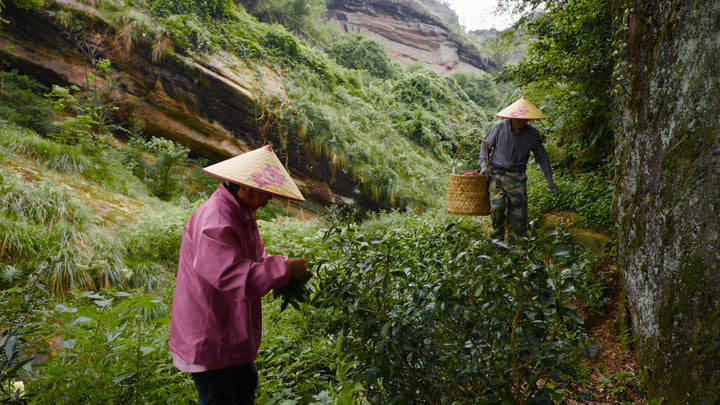
Two people working among green tea bushes on a hillside
Picking among hillside tea bushes (illustrative scene)

From Mountain Villages to Southeast Asia

Rivers carried Liubao tea out of the mountains before road transport became convenient. Tea packed in baskets traveled through the local waterways into the Xijiang system, onward toward Guangzhou and then to overseas markets. This trading connection is remembered as the Tea Boat Ancient Route.

By the late nineteenth century, Liubao was closely linked with Chinese communities in Southeast Asia, including workers in Malaya’s tin-mining regions. Ipoh and Kuala Lumpur became important destinations.

The trade carried an everyday drinking habit as well as a commodity. A cup of familiar tea offered a connection with home for people building lives far away.

Traditional Heaping and Modern Pile Fermentation

A common traditional initial-making route includes heat fixation, rolling, moist heaping, further rolling where needed, and drying. Fixation changes enzyme activity, rolling shapes the leaves, and warm, moist heaping allows further changes before drying.

Modern Liubao commonly includes a later water-added pile-fermentation stage. Its timing and purpose differ from heaping during traditional initial manufacture. Keeping those stages distinct helps you understand the two approaches.

Traditional practice also varies among makers, including steaming and drying choices. Leaf heaps and rolled clumps give you views of the material; the maker’s own records explain how a particular tea moves through the process.

Small heaps of twisted tea leaves on a woven bamboo tray
Leaf heaps on a bamboo tray (illustrative scene)
A hand holding two green clumps of rolled tea leaves
Rolled leaf clumps in a hand (illustrative scene)

What Time Can Bring

The material and making influence how a young traditional-process Liubao begins. It can retain a lively leaf character, herbal impressions and noticeable structure.

Storage can change aroma and taste over time. Research on stored Liubao has found shifts toward woody and herbal characteristics, while different teas can reach different sensory balances. Those results do not establish one ideal age for every tea.

For everyday keeping, follow the guidance supplied with your tea and keep it away from excess moisture and strong odors. The fragrance, texture and finish of the present cup are more useful than age alone.

Open woven baskets filled with tea leaves arranged in a room
Tea-filled baskets indoors (illustrative scene)

Understanding Betel-Nut Aroma

Bing lang xiang, usually translated as betel-nut aroma, is a traditional tasting term associated with Liubao. It describes an aromatic impression rather than an ingredient list.

For a first approach, consider dry wood, a nut-like warmth or a lightly spicy impression. Other cups may draw your attention toward dried leaves, herbs or aged fragrance.

Smell the dry leaves, then compare the warm vessel and the cup after a sip. Begin with a familiar reference of your own instead of trying to force every impression into one traditional word.

Dry tea leaves inside the mouth of a clay teapot
Dry leaves in a teapot (illustrative scene)

Aged Wood, Herbs and a Rounded Cup

Yunsho currently describes its Liubao through aged wood and gentle herbal fragrance. The liquor is deep red, thick and bright, with a smooth, rounded mouthfeel.

The taste is mellow and composed, carrying a distinctive betel-nut-like note and aged character. Its finish is herbal, rounded and quietly persistent.

Take a small sip and pause after swallowing. Notice how the texture carries the aroma and how the finish changes across separate infusions. Return to a little cooled tea to compare the same cup at a different temperature.

Deep red tea liquor of Yunsho Liubao Tea in a clear pitcher
Yunsho’s Liubao tea liquor
Reddish amber tea in a clear glass pitcher
Tea liquor in a glass pitcher (illustrative scene)

Give the Cup Room to Unfold

A small teapot or gaiwan lets you explore Liubao through separate infusions. Warm the vessel, add your tea and use the instructions supplied with it as a starting point.

Pour the infusion completely away from the leaves when it reaches the strength you enjoy. If it feels too strong, shorten the next steep; if it is too light, give it more time. Keep other variables steady while you compare.

Longer infusion methods, including a flask, bring a different balance from small-vessel brewing. Choose the method and strength you enjoy, and follow guidance for the tea and vessel you are using.

Get to know the gaiwan Getting started with gongfu brewing
Tea leaves tipped from a white scoop into a clay teapot
Adding leaves to a teapot (illustrative scene)
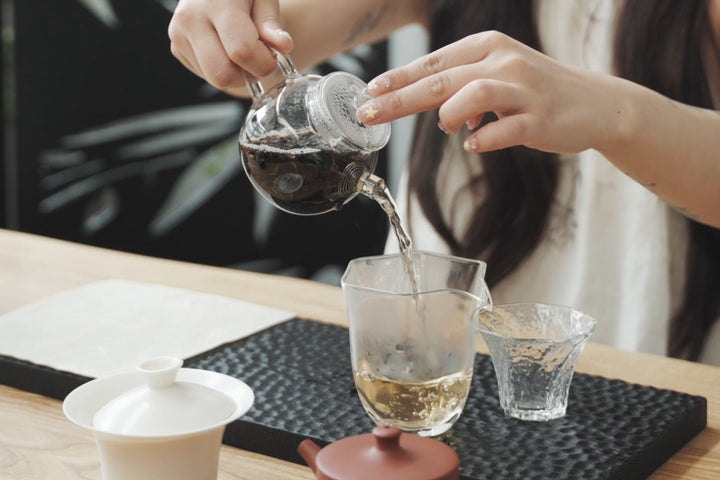
Amber tea poured into a small white-and-blue cup
Serving a small cup (illustrative scene)

Common Questions

Is Liubao the same tea as Pu-erh?

Liubao is associated with Guangxi, especially the Liubao and Wuzhou tradition, while Pu-erh belongs to Yunnan’s tea tradition. They can share mature flavors, but the names and regional making histories are different.

What does betel-nut aroma mean here?

Bing lang xiang is a traditional sensory term associated with Liubao. It is a comparison for an aromatic impression, rather than an ingredient list. Use familiar woody, herbal or nut-like references to explore what you notice in the cup.

Does older Liubao always taste better?

Time alone does not determine the cup. The starting material, making and storage conditions matter, and different teas can follow different paths. Judge the fragrance, texture and finish of the tea you are drinking rather than relying on age alone.

Explore this tea

Liubao

View Liubao Browse Pu-erh & Liubao Tea