
Tea guides / oolong tea

Auspicious Aroma (Rui Xiang)

A Fragrant Expression of Wuyi Rock Tea

Explore Rui Xiang’s tea-plant story, the craft of Wuyi rock tea, and a floral, honeyed cup that rewards a slower look.

What is Auspicious Aroma?

Auspicious Aroma is Yunsho’s floral Wuyi rock-tea expression within the oolong family. The Rui Xiang name has a modern tea-plant story, while growing conditions and the withering, leaf-turning, shaping and roast together introduce the finished cup.

Explore Yunsho’s Auspicious Aroma
Dry loose leaves of Auspicious Aroma Wuyi Rock Tea
Yunsho’s Auspicious Aroma dry tea

Meet Auspicious Aroma

Auspicious Aroma is the English name Yunsho uses for this Wuyi rock tea. Rui Xiang, or 瑞香, evokes auspicious fragrance. The tea belongs to the oolong family.

An expressive aroma is an inviting introduction, but the cup offers more than the first scent. Notice the texture as you sip and the floral or honeyed impression that remains afterward.

Wuyi has many named tea expressions. Exploring another one, such as Shui Xian, gives you a useful way to compare fragrance, structure and finish within the same regional tradition.

Explore the six Chinese tea categories Explore Wuyi Shui Xian
Dark twisted dry tea leaves in a white bowl
Twisted dry leaves in a white bowl (illustrative scene)

A Modern Tea-Plant Story

In tea-plant literature, Rui Xiang has a modern breeding story. Researchers at the Tea Research Institute of the Fujian Academy of Agricultural Sciences selected the line from naturally cross-pollinated descendants of Huangdan.

A 2004 report introduced the newly bred oolong line through its aromatic potential and the research behind its selection. This is cultivar history: it gives context to a name while remaining separate from the sourcing details of an individual tea.

The story also shows how traditions continue to develop. New leaf material gives experienced makers another starting point, and their handling turns that potential into a finished cup.

The Wuyi Setting Behind the Cup

Wuyi rock tea comes from the tea-growing region of northern Fujian and is often called yancha. The rocky, wooded terrain provides a familiar setting for that tradition, alongside the plants, cultivation and making.

Tea drinkers use yan yun, often translated as rock rhyme, for a combination of aroma, depth, smoothness and lingering flavor. It describes a whole experience rather than one isolated taste.

With an aromatic tea, start by asking how the fragrance carries into the liquor. After swallowing, pause and notice the remaining flavor and texture. Those observations give you a practical way into the idea of rock-tea character.

Tea terraces and a path between wooded rocky slopes
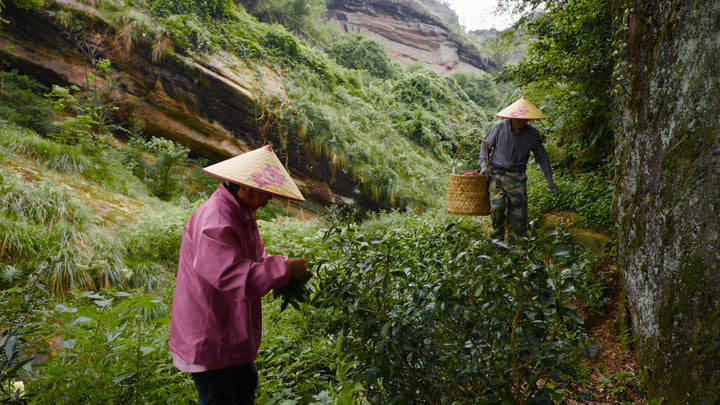
Terraces within a rocky wooded landscape (illustrative scene)
Young green shoots among tea plants in a growing landscape
Young shoots among tea plants (illustrative scene)

Withering, Movement and Rest

The early making begins with withering, during which fresh leaves lose some moisture and become more pliable. Leaf-turning, or zuo qing, then alternates movement with periods of rest.

Handling and controlled oxidation develop the leaves before the later heat and shaping stages. The maker observes the material and adjusts the work to its condition and the weather.

Rest is part of the craft. A tray of leaves offers a simple way to picture the material between handling stages; the broad sequence matters more than treating one schedule as a rule for every tea.

Green leaves on and beside woven trays arranged on shelves
Leaves on woven trays (illustrative scene)
Green and reddish-edged leaves gathered on a woven tray
Leaf material on a woven tray (illustrative scene)

Fixing, Rolling and Drying

Heat fixation limits enzymatic oxidation after the leaf-turning stage. Rolling shapes the softened leaves into strips, and drying prepares the tea for its finishing roast.

These stages have different purposes: fixing limits the earlier transformation, rolling forms the leaves, and drying removes moisture. Following them in order helps explain how fresh leaf material becomes the dark strips you brew.

Handwork and equipment can both play a role. A finished tea is better understood through its stated making and the resulting cup than through one broad label such as handmade.

People handling green tea leaves in steaming pans
Handling leaves in heated pans (illustrative scene)
Hands working tea leaves on a woven tray
Working leaves on a woven tray (illustrative scene)

Keeping Fragrance and Roasted Warmth in Balance

Roasting adds another dimension to rock tea. Its warmth sits alongside the character developed earlier in the leaves, and the maker’s choices help determine the final balance.

Basket roasting and other roasting equipment are different ways to manage heat. The approach and duration can vary with the tea; a floral cup does not by itself establish one fixed roast level.

As you taste, compare the warm roasted impression with the fragrance and the texture. Revisit the cup as it cools a little, and notice whether a softer floral or honeyed character becomes easier to follow.

Rows of baskets holding dark tea leaves with temperature probes
Leaf baskets and temperature probes (illustrative scene)
Glowing coals and sparks in a metal container
Charcoal as a heat source (illustrative scene)

Follow the Florals Through the Sip

Yunsho’s current Auspicious Aroma description centers on orchid and gardenia impressions with a gentle honeyed nuance. The texture is soft and rounded, with floral and honeyed flavor lingering after the cup is empty.

First smell, then sip. Compare what you notice on the lid with what appears in the liquor, and give the finish a moment before drinking again. The fragrance and the body can be explored together.

Across infusions, notice how the balance develops rather than searching for a guaranteed number of cups. A little tea left to cool also offers a different view of the fragrance and sweetness.

Brewed tea liquor of Auspicious Aroma Wuyi Rock Tea
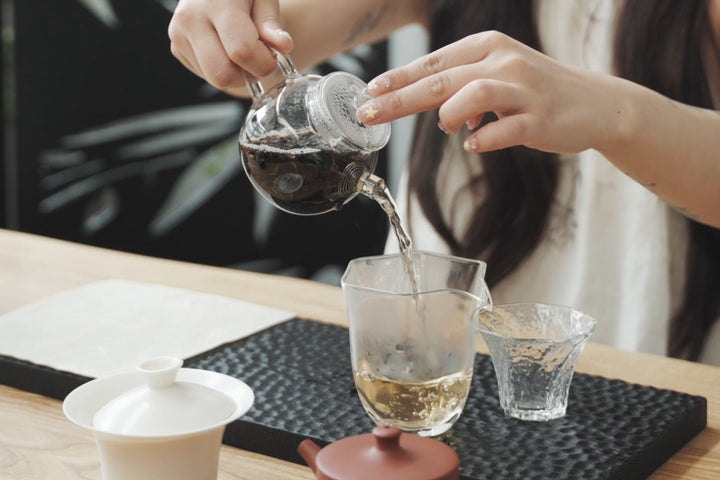
Yunsho’s Auspicious Aroma tea liquor

Explore It Through Separate Infusions

A gaiwan or small teapot makes it easy to follow the tea across short, separate infusions. Warm the vessel, add the tea and water, and use the supplied guidance for the tea you are drinking as a starting point.

Pour completely away from the leaves when the cup reaches the strength you enjoy. If it feels too strong or drying, shorten the next infusion; if it feels too light, give it a little more time. Change one variable at a time to understand its effect.

For an everyday mug, use a roomy infuser and remove it once the tea tastes right to you. Between infusions, smell the lid or empty cup as it cools, then see how that fragrance follows into the next sip.

Get to know the gaiwan Getting started with gongfu brewing
Styled tea scene featuring Auspicious Aroma Wuyi Rock Tea
A tea setting with Yunsho’s Auspicious Aroma

Common Questions

Is Auspicious Aroma a Wuyi rock tea or a separate tea category?

Auspicious Aroma is a Wuyi rock-tea expression within the oolong family. A particular tea name and its flavor do not create a separate category; the broader regional making introduces the cup.

What do floral and honeyed tasting words describe?

They are references for the aromas and flavors you notice in the cup. Try comparing the warm lid, the liquor and the cooled empty cup. You do not need to identify every flower or match a flavor list exactly.

Must every Wuyi rock tea taste strongly roasted?

No single roast intensity describes every rock tea. Leaf material, earlier processing and roasting decisions work together. Compare the roasted warmth with the fragrance, texture and finish rather than choosing by roast strength alone.

Explore this tea

Auspicious Aroma

View Auspicious Aroma Browse Chinese Oolong Tea