

Tea guides / oolong tea

Wuyi Shui Xian

Florals, Roast and the Character of Rock Tea

Explore a classic Wuyi oolong through its leaf tradition, careful making, roasted warmth and a structured cup that unfolds across infusions.

What is Wuyi Shui Xian?

Wuyi Shui Xian is an oolong in northern Fujian’s Wuyi rock-tea tradition. Withering, leaf-turning, heat fixation, rolling, drying and roasting shape its character. It is distinct from Zhangping Shui Xian, the paper-wrapped square oolong.

Explore Yunsho’s Wuyi Shui Xian
Dry loose leaves of Shui Xian Wuyi Rock Tea
Yunsho’s Wuyi Shui Xian dry tea

Meet Wuyi Shui Xian

Wuyi Shui Xian is an oolong within the Wuyi rock-tea tradition of northern Fujian. The name is also written Shuixian and is sometimes translated as Narcissus. Its familiar presentation is substantial, twisted dry-leaf strips.

It is distinct from Zhangping Shui Xian, the paper-wrapped square oolong of southwestern Fujian. The shared name connects a tea tradition, while the region and making give each style its own form and cup.

Start with the whole experience: fragrance, body and the finish after the sip. A familiar name gives you a useful introduction, but the leaves and the maker’s choices still matter.

Explore the six Chinese tea categories Meet Zhangping’s paper-wrapped Shui Xian
Dark twisted dry tea leaves in a white bowl
Twisted dry-leaf strips (illustrative scene)

A Fujian Tea with a Long Story

The Shui Xian tea-plant tradition is associated with Dahu in today’s Jianyang District of Nanping, northern Fujian. In Wuyi it became an established name in rock-tea making.

A 1966 article in the Journal of Tea Science was already discussing Shui Xian leaves in relation to Wuyi rock-tea production. That record offers historical context for the relationship between leaf material and craft; it is not a description of every tea sold under the name today.

Names and origin details work best together. When choosing a particular tea, look for clearly stated sourcing, then explore how the making appears in the cup.

Young green shoots in a tea-growing landscape
Shoots and surrounding tea plants (illustrative scene)
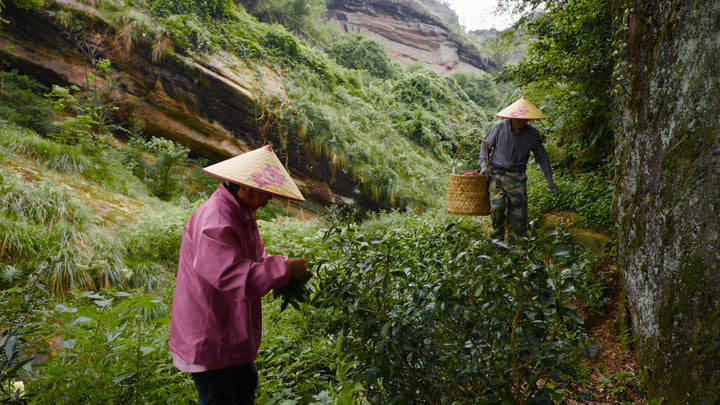
Tea garden terraces and a narrow path between wooded rocky slopes
Terraces among rocky wooded slopes (illustrative scene)

Getting to Know Rock-Tea Character

Wuyi rock tea is often called yancha. Tea drinkers use yan yun, sometimes translated as rock rhyme, to describe a combination of fragrance, depth, smoothness and a lingering finish.

That character develops through growing conditions, tea plants, cultivation and making together. It is more useful to explore it across the sip than to search for a single flavor that explains everything.

Taste a little, pause after swallowing, and notice what remains. Is the body light or substantial? Does the fragrance continue into the finish? A sensory word such as mineral is a tasting reference, rather than proof of an exact growing site.

Withering, Movement and Rest

After picking, withering lets the leaves lose some moisture and become more pliable. During zuo qing, or leaf-turning, movement alternates with periods of rest.

The handling bruises the leaves as oxidation develops their aroma and flavor. Rest is part of the work: the maker observes the leaf condition and adjusts the next movement rather than following one fixed schedule for every harvest.

Green centers and reddish margins are a familiar oolong appearance. They are useful to observe, but the color of a leaf is not a precise oxidation measurement or a way to identify a cultivar from a photograph.

Tea leaves spread on round woven trays arranged on racks
Leaves resting on woven trays (illustrative scene)
A person holding a tray of green leaves between racks of trays
Handling a tray of leaves (illustrative scene)
Backlit green leaves with reddish brown margins held by a hand
Leaf centers and margins (illustrative scene)

Heat Fixation, Rolling and Drying

Heat fixation limits enzymatic oxidation after the earlier leaf-turning work. Rolling then shapes the leaves into strips, and drying prepares the tea for its finishing stages.

These activities have different purposes. The warmth that fixes the leaves, the handling that shapes them, and the later roast should not be treated as one interchangeable step.

Individual makers combine equipment and handwork in different ways. Following the sequence helps you understand how fresh leaves become the finished strips you place in your brewing vessel.

People handling green leaves in steaming pans
Leaf handling in heated pans (illustrative scene)
Hands gathering and working leaves on a woven tray
Working leaves on a woven tray (illustrative scene)

What Roasting Adds

Roasting is an important part of rock-tea finishing. It can add warmth to the aroma and change the balance of the cup, alongside the character developed earlier in the leaves.

Traditional basket roasting and other roasting equipment offer different ways to manage heat. The maker’s decisions about the heat and the duration help shape the final balance; individual teas can follow different roasting approaches.

Compare the roasted impression with the florals rather than judging the tea by roast intensity alone. Let the cup cool a little, then taste again to explore how the warmth, fragrance and finish sit together.

Rows of woven baskets holding dark leaves with dial probes
Leaves and temperature probes in woven baskets (illustrative scene)
Glowing charcoal and sparks in a metal container
Charcoal as a heat source (illustrative scene)

Florals, Roasted Warmth and Structure

Yunsho currently describes its Shui Xian Wuyi Rock Tea through orchid-like florals, warm roasted-nut notes, a lively clear liquor and a structured, persistent mineral finish. These words are tasting references to help you explore the cup.

Notice where the fragrance appears: in the steam, on the lid or as you swallow. Then follow the texture across your palate and the flavor that remains after the sip. You do not need to identify every note.

Compare successive infusions and revisit a little tea as it cools. The balance may change with extraction and temperature, giving you more than one view of the same leaves.

Brewed tea liquor of Shui Xian Wuyi Rock Tea
Yunsho’s Shui Xian Wuyi Rock Tea liquor

Brew in Short Infusions, Then Adjust

A gaiwan or small teapot makes it easy to explore separate infusions. Warm the vessel, add the tea and water, and use the guidance supplied with the tea as your starting point.

Pour the infusion completely away from the leaves when it reaches the strength you enjoy. If it feels too strong or drying, shorten the next infusion; if it feels too light, allow a little more time. Adjust one variable at a time so you can understand the change.

A mug with a roomy infuser also works for a slower session. Give the leaves space to open and remove the infuser once the cup tastes right. Smell the lid or empty cup after it cools a little, then compare that fragrance with the next sip.

Get to know the gaiwan Getting started with gongfu brewing
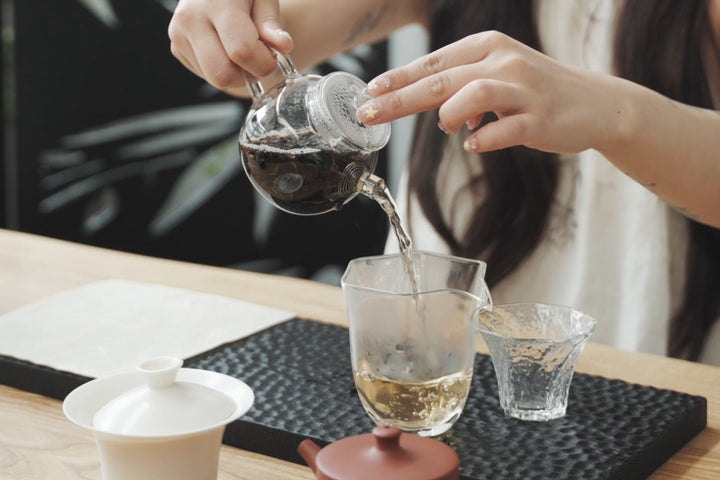
Pouring brewed Shui Xian Wuyi Rock Tea during tea service
Serving Yunsho’s Shui Xian Wuyi Rock Tea

Common Questions

Is Wuyi Shui Xian the same as Zhangping Shui Xian?

They are distinct regional oolong styles. Wuyi Shui Xian belongs to Wuyi rock tea, usually presented as loose strips; Zhangping Shui Xian is known for compact, paper-wrapped squares. The shared name does not make their making and cups identical.

Does a mineral tasting note prove a particular mountain site?

No. Mineral is a sensory description, while a growing site is a traceable origin detail. Consider the stated source, the making and your own tasting together; flavor language alone cannot identify a precise garden.

Does a roasted note mean the tea is smoked?

Roasting and smoking describe different treatments. A warm toasted impression is not evidence of smoking. For a particular tea, consult its stated processing information rather than inferring the method from one flavor word.

Explore this tea

Wuyi Shui Xian

View Wuyi Shui Xian Browse Chinese Oolong Tea