

Tea guides / black tea

Yunnan Sun-Dried Black Tea

Leaves, Sun-Drying and a Honeyed Cup

Explore Yunnan’s black-tea tradition, the craft behind sun drying, and what to notice in a smooth, honeyed cup.

What is Sun-Dried Black Tea?

Yunnan sun-dried black tea, or shai hong, is a black tea whose drying approach uses sunlight. Withering, rolling and oxidation come before drying; the leaves, making and brewing together shape its aroma, body and finish.

Explore Yunsho’s Sun-Dried Black Tea
Dry loose leaves of Wild Forest Sun-Dried Black Tea
Yunsho’s Sun-Dried Black Tea dry tea

What Sun-Dried Black Tea Means

Shai hong, or 晒红, means sun-dried black tea. The name points to the drying approach, while the earlier transformation of the leaves places it in the black-tea family.

In English this family is called black tea; the Chinese name hong cha translates as red tea. Sun-dried black tea is therefore not white tea or raw Pu-erh simply because sunlight is involved. Its dark, twisted leaves are a useful visual introduction, but leaf shape alone cannot tell you its origin or processing details.

Explore the six Chinese tea categories
Dark twisted dry leaves piled on a white plate
Twisted dry leaves on a white plate (illustrative scene)
Close view of dark curled dry leaves
Curled dry-leaf texture (illustrative scene)

Yunnan and Its Black-Tea Tradition

Yunnan gives this style its geographical setting. Within the province, Fengqing in Lincang has an established black-tea tradition. That regional background helps place a tea in context; it does not mean that every Yunnan black tea comes from one village or follows an identical production method.

For a particular tea, look for a clearly stated origin, then consider the leaf material, making and cup together. Geography introduces the tea’s background; tasting brings that context into your own experience.

Tree trunks and a leafy canopy seen from below
Trees and canopy light (illustrative scene)

Leaves, Trees and Growing Context

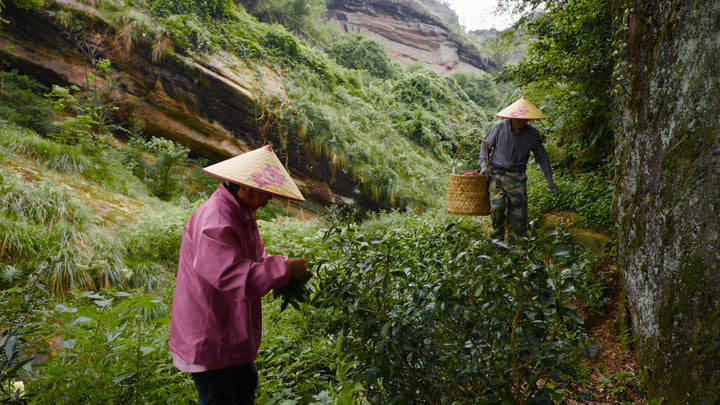
Fresh shoots begin the story long before the finished dark leaves reach your cup. The growing environment and the leaf material matter, alongside the maker’s decisions after picking.

Names such as forest tea or old-tree tea invite interest, but they are not measurements. A large trunk does not reveal a tree’s exact age, and a wooded scene does not establish botanical identity or certification. Useful questions are where the leaves came from, what is known about the plants, and how the tea was made.

Those details add context to tasting. They do not replace it: compare aroma, texture and finish rather than treating a name or a photograph as a guarantee of quality.

Young green shoots growing along a branch
Young shoots and branches (illustrative scene)
A young shoot above a moss-covered branch
A shoot among moss-covered branches (illustrative scene)

From Fresh Leaves to Black Tea

The broad sequence is withering, rolling, oxidation and drying. Withering lets the fresh leaves lose moisture and become more pliable; rolling works the leaves and helps shape them. Oxidation then develops the black-tea character before the finished leaves are dried.

The stage often called fa jiao, or fermentation, in black-tea production mainly refers to enzymatic oxidation. It should not be confused with the post-fermentation methods used for some dark teas.

The sequence explains the category, while individual makers vary their handling and timing. Hand picking and hand processing describe different activities; when a tea is described as handmade, it is useful to know which stages involved handwork.

Hands handling curled tea leaves in a wooden trough
Handling leaves in a wooden trough (illustrative scene)

What the Sun-Drying Stage Changes

The distinctive choice in shai hong is the drying approach. After the earlier black-tea stages, the leaves are spread for sun drying. Making the tea involves more than simply leaving fresh leaves in sunlight.

Drying helps reduce the moisture in the finished tea and also contributes to its aroma. Research comparing black-tea drying methods finds different aroma profiles, so drying is part of the craft rather than just a final storage step. The result still depends on the leaves and the earlier processing.

Sun-dried is not a synonym for smoke-flavored, raw, or guaranteed to improve with years of storage. Enjoy the tea’s present character, and keep the finished leaves dry and protected from strong odors between sessions.

Tea leaves spread on woven trays outdoors
Leaves spread on outdoor trays (illustrative scene)
Rows of woven trays holding dark tea leaves outdoors
Outdoor drying trays (illustrative scene)

What to Notice in the Cup

Start with the aroma, then the body and the finish. Yunsho describes its Wild Forest Sun-Dried Black Tea with floral and ripe-fruit impressions, a warm honeyed sweetness, a smooth body and a gentle sweetness after the sip. These are tasting descriptions, not a list of added ingredients.

Compare the first warm sip with the cup as it cools. Notice whether the texture feels light or rounded, how the aroma changes, and what remains after swallowing. You do not need to identify every note to enjoy the tea.

The Chinese expression hui gan is often used for returning sweetness. You can explore that impression by pausing between sips; neither sweetness nor liquor color proves a tree’s age or the tea’s source.

Brewed tea liquor of Wild Forest Sun-Dried Black Tea
Yunsho’s Wild Forest Sun-Dried Black Tea

Start Brewing, Then Adjust

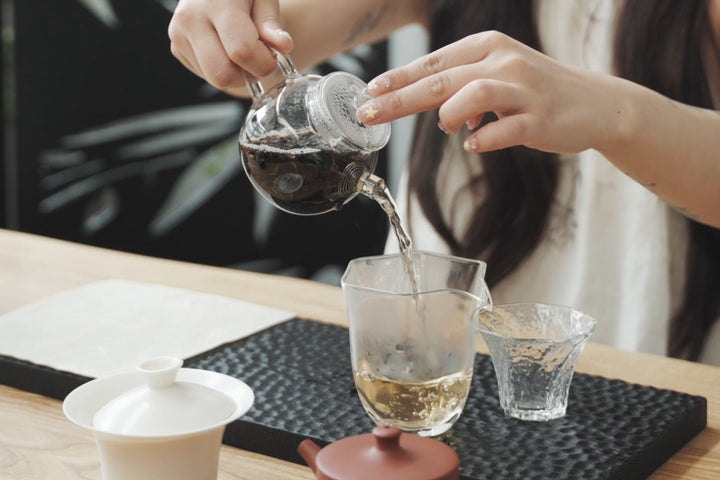
A gaiwan gives you a simple way to explore the tea through separate infusions. Warm the vessel, add the tea and water, then pour the infusion away from the leaves once it reaches the strength you enjoy. Start with the guidance supplied for the tea you are drinking.

Change one thing at a time. If the cup feels too strong or drying, shorten the next infusion; if it feels too light, give it a little more time. Water temperature and the amount of leaf also affect the result. Keep your vessel and leaf amount consistent when comparing cups.

A larger teapot can suit a slower daily session. Whatever the vessel, separate the tea from the water when it tastes right to you, then return to the leaves for another infusion if you enjoy their remaining character.

Get to know the gaiwan Getting started with gongfu brewing
Styled tea scene featuring Wild Forest Sun-Dried Black Tea
A tea setting with Yunsho’s sun-dried black tea
Amber tea being poured into a glass on a tea tray
Amber tea in a glass (illustrative scene)

A Little History Behind Yunnan Black Tea

In 1938, tea specialist Feng Shaoqiu visited Yunnan and made black-tea samples from leaves collected in Fengqing. These samples became part of the story of the tea later named Dianhong.

That history adds context to Yunnan’s black-tea tradition. In your own cup, the most direct introduction is still to brew, observe and taste.

Common Questions

Is sun-dried black tea still a black tea?

Yes. Sun drying describes the drying approach. The leaves first develop through the withering, rolling and oxidation stages associated with black-tea making; sunlight alone does not define the tea category.

Does a forest or old-tree name prove the tree’s age?

No. A name or photograph cannot establish a tree’s age, botanical identity or a specific growing site. Those details need traceable information about the leaves and their source. Leaf material, processing and brewing also shape the cup.

Does sun drying mean I should age the tea?

No. Sun drying is a processing choice, not a promise that every tea will improve with long storage. Keep the tea dry, closed and away from strong odors, and enjoy its current character.

Explore this tea

Sun-Dried Black Tea

View Sun-Dried Black Tea Browse Chinese Black Tea